
Exploring how to become a labor and delivery nurse can be a smart move for nursing students interested in women’s health and obstetrics. First, complete the basic labor and delivery nurse schooling requirements by earning a BSN. Then, pass the NCLEX and obtain a nursing license.
About 3.6 million babies were born in the U.S. in 2024. Most of them likely benefited from the attention and skills of a nurse. A labor and delivery nurse, also known as an L and D nurse, has extensive training and experience in the care of patients and newborn infants during and after labor and delivery. If you’re interested in learning how to become a labor and delivery nurse, the first step is enrolling in nursing school.
Notre Dame of Maryland University’s Accelerated Bachelor of Science in Nursing (ABSN) program allows you to apply your non-nursing bachelor’s degree or existing college credits toward earning a Bachelor of Science in Nursing (BSN) in as few as 15 months.
You’ll gain foundational labor and delivery nurse schooling that will prepare you to pursue advanced education and certification in this nursing specialty. The nursing education you receive through the ABSN program prepares you to pursue labor and delivery or any of the nursing specialties available.
Before switching careers, explore answers to common questions, such as “What do labor and delivery nurses do?”Consider the steps required to become a registered nurse (RN) and explore opportunities for career advancement.

Consider the nursing school requirements you’ll need to meet to get started.
What Does a Labor and Delivery Nurse Do?
A labor and delivery nurse supports and provides care to patients who are going through labor and giving birth. Some common responsibilities include:
- Administering medications
- Alerting the physician to signs of complications
- Monitoring the mother’s and baby’s vital signs, watching for potential signs of fetal distress or maternal complications
- Preparing for c-sections
- Providing emotional support, encouragement and practical health guidance to patients
- Timing contractions
It’s important for L and D RNs to pay particular attention to potential complications. The U.S. has the highest maternal mortality rate among high-income nations. Many pregnancy-related deaths are preventable, and L and D nurses must do what they can to limit the risk and promote health among patients in labor.
Steps to Become a Labor and Delivery Nurse
Your first step toward becoming an L and D nurse is completing the labor and delivery nurse education requirements.
Earn a BSN
You can earn a BSN in as few as 15 months at NDMU. Our ABSN program features a blend of didactic coursework and hands-on learning experiences to help you become a practice-ready nurse candidate. You’ll work through the following:
- Coursework: Choose from online or in-person coursework in nursing theories.
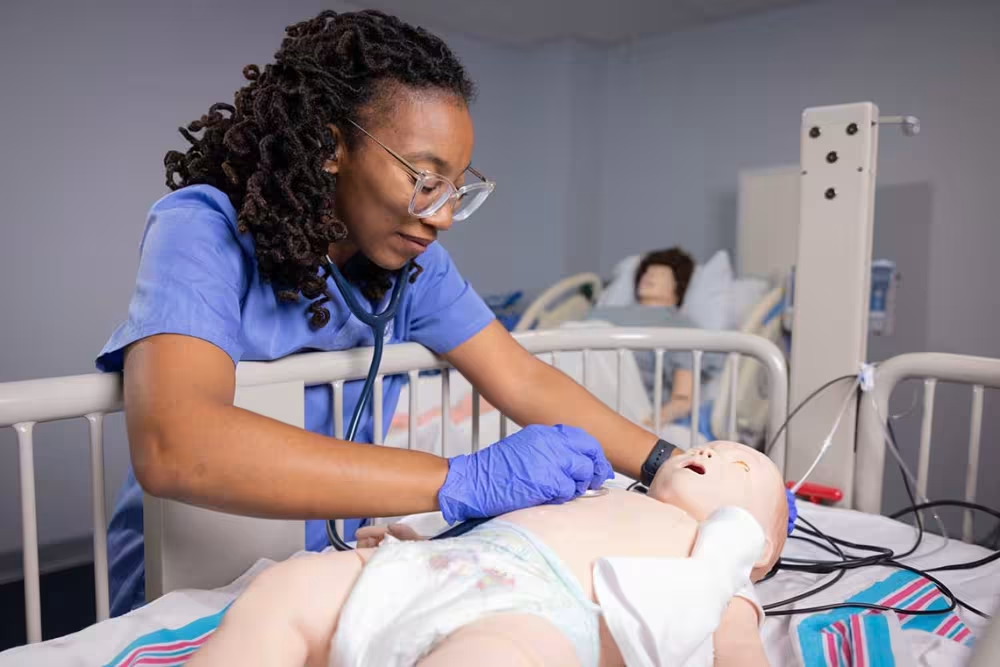
- Skills and simulation experiences: Complete in-person nursing skills and simulation lab experiences, which teach everything from inserting a nasogastric tube to handling allergic reactions.
- Clinical rotations: Work a series of shifts in different clinical areas, which may include labor and delivery. You’ll provide direct patient care under the supervision of clinical instructors and alongside experienced nurses.
Obtain a Nursing License
Graduating with a BSN will qualify you to take the NCLEX-RN. This licensure exam tests your nursing knowledge and ability to apply critical thinking skills to develop appropriate nursing responses. Start studying well in advance, such as by answering practice questions daily and taking full-length practice exams in the months leading up to your exam date. Once you pass, you can obtain your nursing license from your state’s board of nursing.
Gain Clinical Experience
Labor and delivery nursing is an entry-level nursing specialty, which means you can begin applying for jobs as soon as you have a license. If you can’t find a job right away, look for jobs in a similar nursing specialty, such as neonatal nursing. While gaining clinical experience in a similar specialty, you can continue looking for L and D jobs.
Consider Pursuing Additional Credentials and Advancement
Now that you know how to become a labor and delivery nurse, you can explore ways to advance your career in this specialty. You can obtain additional credentials, such as professional certifications. Consider earning the Inpatient Obstetric Nursing (RNC-OB) certification from the National Certification Corporation (NCC).
You might also consider going back to school to earn a Master of Science in Nursing (MSN) or a Doctor of Nursing Practice (DNP) with a focus on labor and delivery. Then, you could pursue the necessary board certification to become a certified nurse midwife (CNM), which is a type of advanced practice registered nurse (APRN).

Labor and Delivery Nurse Salary and Job Outlook
The U.S. Bureau of Labor Statistics (BLS) doesn’t track employment data specifically for labor and delivery nurses. All RNs made a median annual salary of $93,600 as of May 2024. The projected job growth rate for RNs is 5% from 2024 to 2034, faster than the average for all occupations, indicating that 166,100 RN jobs will be added during this period.
FAQs About L and D Nurses
If you’re still not sure if labor and delivery is the right nursing specialty for you, take some time to review the answers to frequently asked questions.
How Long Does It Take to Become a Labor and Delivery Nurse?
It depends on your starting point. If you lack prior college education, you’ll need to apply to a traditional four-year BSN program. If you have a non-nursing bachelor’s degree or existing college credits, you can apply to Notre Dame’s ABSN program, which can be completed in as few as 15 months following the completion of prerequisites.
After earning a BSN, you might have to wait a few months before taking and passing the NCLEX-RN, assuming you pass on the first attempt. Once you have an RN license, you can begin applying to labor and delivery nursing jobs. Overall, it can take less than two to four years, depending on your starting point.
What Degree Is Best for a Labor and Delivery Nurse?
It’s possible to become an RN with an Associate Degree in Nursing (ADN). A BSN is preferable for an L and D nurse, however, as it provides a more comprehensive nursing education, better preparing you to work with a high-risk patient population. Additionally, a BSN lays the foundation for pursuing graduate-level nursing education in preparation for career advancement.
Is It Hard to Become an L and D Nurse?
Earning a BSN, completing clinical rotations and passing the NCLEX-RN are all challenging endeavors. Countless students have already succeeded at it, however, and so can you. If enrolled at Notre Dame of Maryland University, you’ll enjoy a close-knit and supportive nursing cohort, personalized attention from faculty and access to our Academic Success Coaches to help facilitate your success.

Wondering how to pay for nursing school? Get a complete guide to financing your education.
Get Your Start in Nursing at Notre Dame
Notre Dame of Maryland University offers a rapid entry into nursing for motivated career switchers. If you have a non-nursing bachelor’s degree or meet the existing college credits requirements, you can earn a BSN in as few as 15 months, take the NCLEX-RN and begin working as a nurse faster than other BSN routes.
While you’re a student at NDMU, you’ll enjoy the support of our Academic Success Coaches, who can help you navigate the nursing curriculum and prepare for the NCLEX-RN. Plus, you can choose from online or in-person coursework.
Contact an admissions advisor today to take the next step. With no waitlist, you can get started sooner at NDMU.