
Knowing what to expect in nursing school helps students prepare to enroll. Nursing school offers a fast-paced curriculum comprising coursework that teaches nursing theory and nursing labs that teach applied clinical skills. Clinical rotations also provide an immersive learning experience to prepare students for the realities of nursing.
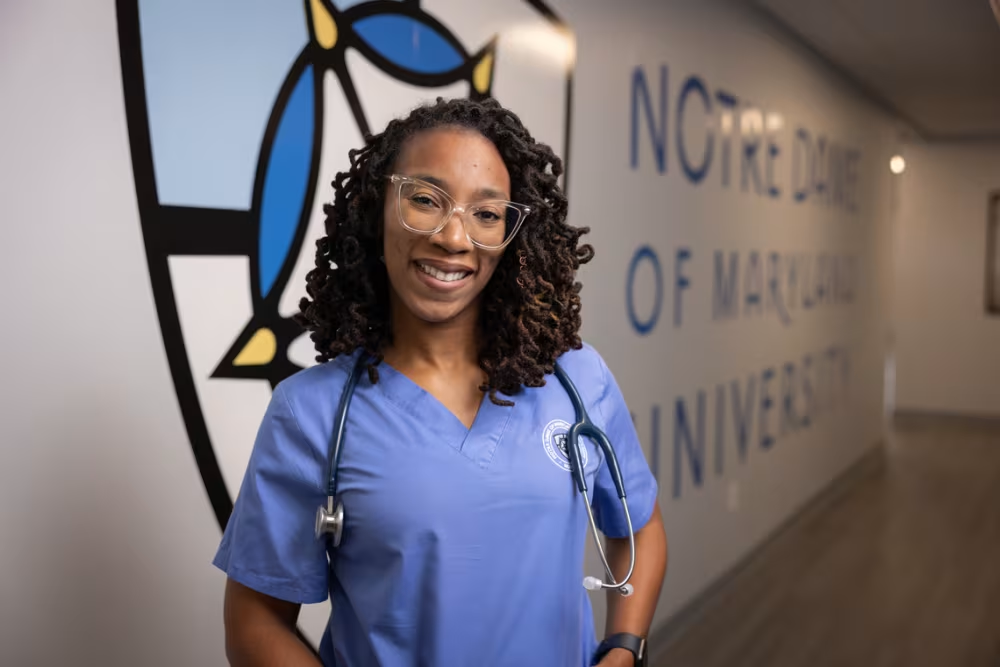
Nursing school is a challenging blend of didactic coursework and hands-on, immersive learning experiences. A rigorous curriculum is needed to ready nurses for the responsibility of making critical decisions regarding their patients’ health and safety. Taking some time to prepare and learning what to expect in nursing school can help set you up for success.
For those students entering Notre Dame of Maryland University’s Accelerated Bachelor of Science in Nursing (ABSN) program, you’ll have plenty of student support resources to facilitate your progress, including tutoring services. What is nursing school like at NDMU? Along with individualized support, Notre Dame offers the flexibility to choose between online and on-campus coursework. You’ll be able to learn in a way that works best for you.
While familiarizing yourself with what to expect in nursing school, we advise taking a closer look at how nursing school works, what a day in the life of a nursing student is like and what you can expect to learn.
What to Expect in Nursing School
You can expect a fast-paced curriculum, but your first week will focus on acclimating to nursing school. You will participate in orientation and syllabus distribution, helping you find your footing and establish expectations going forward.
NDMU uses the cohort model for our School of Nursing. You’ll join a close-knit group of nursing students who take the same classes and labs, proceeding through nursing school together and working toward the same graduation date. Your nursing cohort provides support and camaraderie, facilitating your progress while building your professional network.
The curriculum assumes no prior health care experience. You’ll start with the basics and move on to progressively more complicated topics. The same theories you’ll learn in classes will relate to the skills you’ll learn in labs.
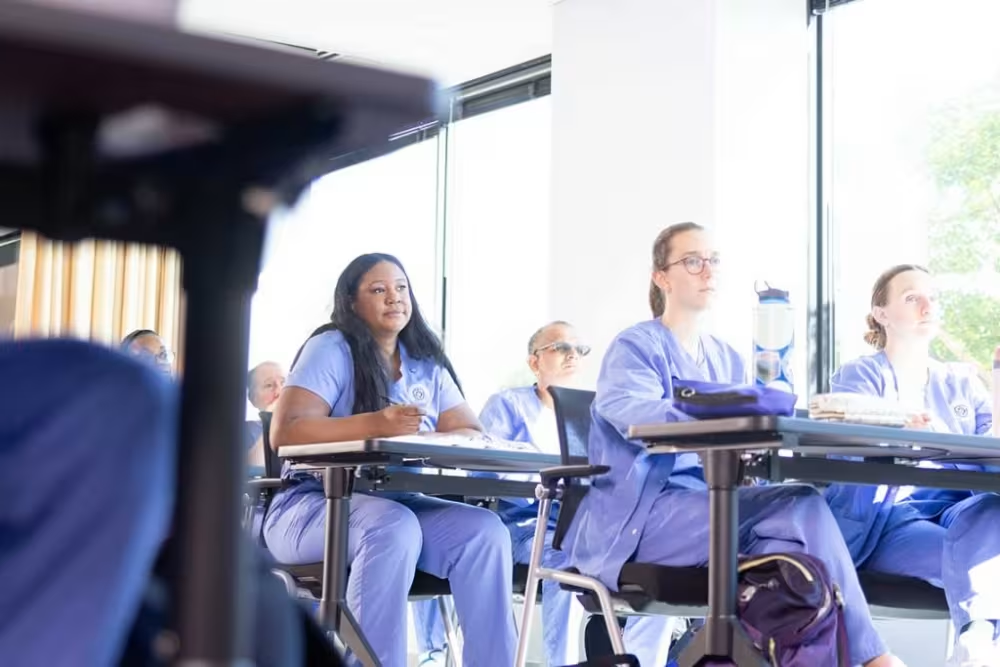
Discover what you should know before pursuing your BSN.
What Do You Learn in Nursing School?
Nursing school provides a comprehensive education that spans nursing theory and fundamentals to nursing specialties. What do you learn in nursing school, specifically? At Notre Dame, some of the topics covered in the ABSN curriculum include:
- Community health nursing
- Maternal and newborn nursing
- Nursing foundations (e.g., holistic health assessment, foundations of a caring profession)
- Nursing research
- Professional nursing care for children and families
- Professional nursing care of the adult
- Psychiatric/mental health
A Day in the Life of a Nursing Student
Discover what to expect in nursing school by taking a closer look at the coursework, labs and clinicals.
What to Expect in Your Coursework
Your BSN courses will provide a foundation for clinical nursing practice, no matter which nursing specialty you plan to pursue. You’ll participate in lectures, reading assignments and other learning activities to build your knowledge about patient assessments, treatment administration and other key topics.
For example, you’ll take the following courses during your first semester at Notre Dame:
- NUR 301: Holistic Health Assessment
- NUR 303: Nursing Informatics
- NUR 305: Foundations of a Caring Profession
- NUR 310: Pathopharmacology
Expect to study every day. Even if you don’t have an upcoming exam, you’ll need to review materials for simulation labs, clinical rotations and the NCLEX. Many nursing students like to establish study groups with their cohort.
What to Expect During Skills and Simulation Labs
NDMU’s skills and simulation labs are an essential part of the curriculum. You will participate in labs multiple days each week at our learning site in Elkridge, Maryland. Students in our on-campus ABSN program attend labs at the Center for Caring with Technology lab at our main campus in Baltimore.
In either case, you can expect these labs to feature advanced equipment, medical supplies and high-tech manikins. They’re meant to provide a contextual learning environment for you to combine your foundational nursing theory knowledge with hands-on skills practice.
In skills labs, you will work with medical equipment and supplies, learning how to perform foundational nursing skills effectively, such as:
- Applying wound care
- Performing catheterization
- Performing head-to-toe patient assessments
- Placing nasogastric tubes
In addition to skills labs, you will participate in nursing simulation labs. Simulation labs provide a safe, risk-free environment to practice your nursing care skills. Nursing simulation labs teach you how and when to apply nursing skills in simulated clinical scenarios, with each student playing a role in a scenario. You’ll collaborate and navigate medical procedures and emergencies. Then, afterwards, you will review each scenario with instructors to identify best practices, successes and areas of improvement.
Nursing skills and simulation labs help prepare you for clinical rotations, another important aspect of your nursing education.
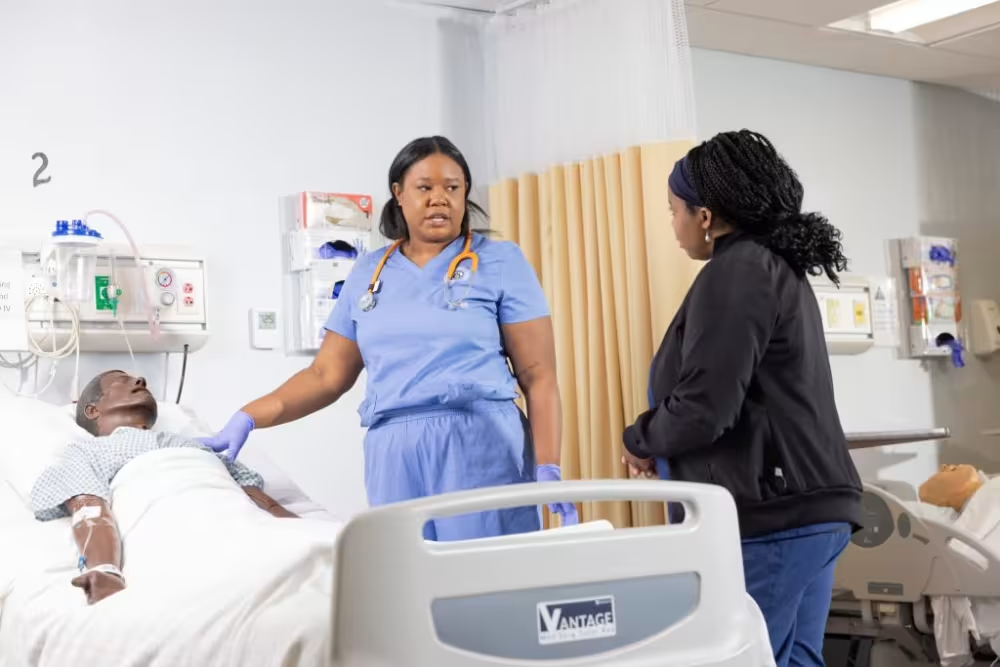
What to Expect During Clinical Rotations
The hallmark component of any nursing school experience, clinical rotations involve putting nursing skills and theories into practice in a real-world setting. At NDMU, you will complete your clinical rotations at various health care facilities in the greater Baltimore area.
What is nursing school like during clinicals? Many describe clinical rotations as the closest experience you’ll get to what working as a nurse is really like, giving you the chance to interact with health care professionals and perform care tasks for patients. Clinical rotations begin in the first semester of the Notre Dame ABSN program.
Like the curriculum itself, clinicals progress in a sequential manner. Working under the guidance of experienced clinical instructors, common clinical tasks you can expect to perform during your first semester include taking vitals and performing head-to-toe assessments.
Your clinical rotations cover a variety of clinical settings and areas of nursing, such as:
- Advanced medical surgical nursing
- Community health
- Medical-surgical nursing
- Obstetrics
- Pediatrics
- Psychiatric and mental health nursing
This opportunity to explore various specialties can help you narrow down which areas of nursing appeal to you. During your clinicals, you will also work alongside experienced RNs, creating valuable networking opportunities.

Studying is key to staying on top of your courses. Follow the top 11 study tips for nursing students.
Tips for Succeeding in Nursing School
One of the first steps to prepare for success in nursing school is to ensure you’re fully equipped. You’ll need standard school supplies, such as a day planner, folders or binders, notebooks, pens, highlighters and notecards. These supplies will help you stay organized and support your study sessions. You’ll learn about course-specific supplies to purchase once you receive your syllabi.
Other essential nursing school tips include:
- Form connections in your cohort. Meet other students for group study and emotional support.
- Make use of NDMU’s tutoring services and Academic Success Coaches.
- Plan each week’s schedule in advance. Block off plenty of time for studying and assignments.
- Review your notes before each class to improve learning retention.
- Stay on top of your work.
- Use active study techniques, such as active recall.
Earn Your BSN at Notre Dame
Can you envision yourself living a day in the life of a nursing student? Take the first step toward making it a reality at Notre Dame of Maryland.
At Notre Dame, you can earn your BSN in as few as 15 months. First, review the ABSN admissions requirements to gauge whether your academic background makes you a good fit for the program. Then an admissions advisor can walk you through the admissions process and determine which requirements still need to be fulfilled before applying.
Request info today and learn more about switching to nursing.