
Neonatal nursing is a specialty that involves infant care. Some neonatal registered nurses care for healthy infants, while others care for premature and otherwise critically ill infants in NICUs. Becoming a neonatal nurse requires a nursing degree, RN license, specialty certifications and entry-level clinical experience.
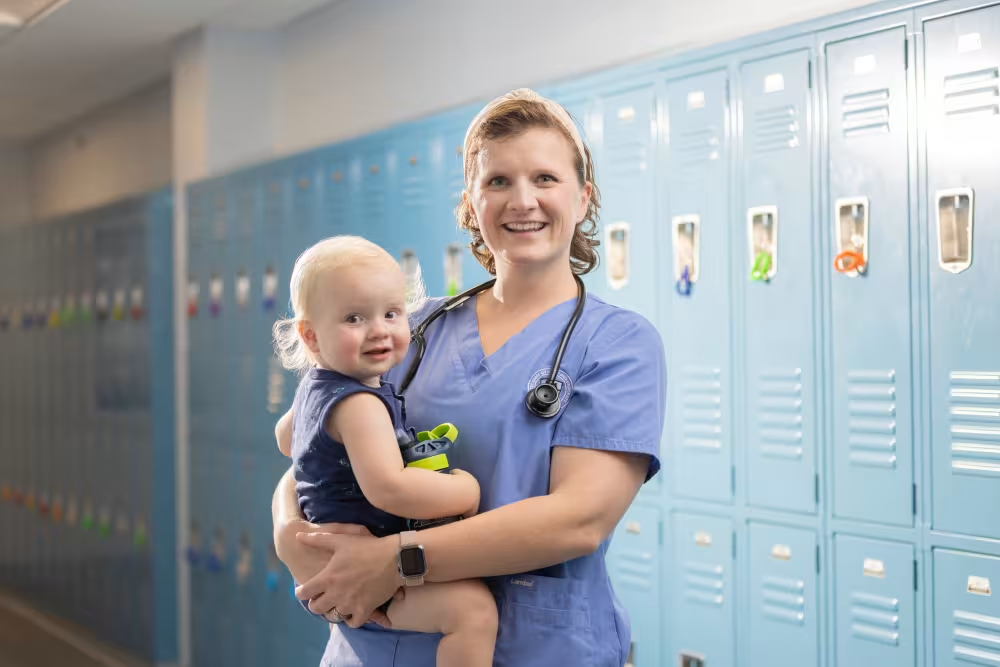
A nurse that takes care of babies is known as a neonatal registered nurse. Neonatal nursing is a nursing specialty that encompasses the care of healthy infants, as well as the care of those suffering from a variety of health conditions, from mild to severe. Working in a neonatal unit could be a good choice for a nurse or nursing student who is interested in working with babies and their parents.
If you aren’t yet a nurse but would like to become one, you could make the transition faster at Notre Dame of Maryland University’s Accelerated Bachelor of Science in Nursing (ABSN) program. If you have a completed non-nursing bachelor’s degree or hold existing college credits, you may be eligible to apply. After completing the prerequisites, you could graduate in as few as 15 months, ready to take the NCLEX-RN and launch your nursing career.
As you look ahead to your nursing career, learn more about your nursing specialty options. Get the answers to common questions, such as “What is a neonatal nurse’s job like?” and “Which skills are important in neonatal care?” Then, explore the career requirements and pathway.
What Is Neonatal Nursing?
Neonatal nursing is a nursing specialty that focuses on the care of infants. There are different types of neonatal RNs. Some work in well-baby units, caring for newborns without any particular health issues. Others work in neonatal intensive care units (NICUs), which treat newborns with health complications. There are different levels of NICUs, each treating newborns with varying degrees of health complications.
What Do Neonatal Nurses Do?
A neonatal registered nurse’s responsibilities can vary considerably based on the level of NICU in which they work. In general, however, some common tasks include:
- Administering IV fluids, supplemental oxygen and medications
- Monitoring patients’ vital signs, weight and fluid status
- Offering patient education and emotional support to parents
- Providing complex care, including mechanical ventilation
- Providing infant care, including feedings, bathing and diaper changes

Learn how to become a labor and delivery nurse, a specialty closely related to neonatal nursing.
Where Do Neonatal Nurses Work?
Neonatal nurses typically work in hospital settings, in well-baby units or NICUs. There are different levels of NICUs:
- Level II: This NICU cares for infants who need closer monitoring and who were born full-term or at 32 weeks of gestation and above. Babies here typically need IV fluids, medications and close monitoring of vital signs, weight and fluid status.
- Level III: This NICU cares for babies who are critically ill, including those born prior to 32 weeks of gestation or those weighing less than 1,500 grams. Babies here may be getting ready for surgery and need more intensive interventions, such as ventilators.
- Level IV: The highest level of NICU, Level IV units care for high-acuity infants who need significant interventions, such as major surgery or extracorporeal membrane oxygenation (ECMO). The Level IV NICU cares for infants with a range of health issues, including congenital heart defects and cardiopulmonary failure.
Level I is the well-baby unit, which cares for infants who only require routine nursing care after delivery.
Skills and Qualities Needed to Succeed in Neonatal Nursing
To work in neonatal nursing, RNs need strong clinical skills, such as being able to monitor patients, calculate medication and fluid dosage and manage medical equipment. They also need several soft skills to do their job well. These can include:
- Advocacy
- Attention to detail
- Communication skills
- Compassion
- Emotional intelligence
- Emotional resilience
- Patience and calmness under pressure
Education, Training and Neonatal Registered Nurse Certifications
If you’ve decided that becoming a neonatal nurse is right for you, you’ll need to obtain the following credentials, in order:
- A nursing degree, such as a BSN
- RN licensure
- Clinical experience in pediatrics or a well-baby unit
You’ll also need the following certifications:
- Basic Life Support (BLS)
- Cardiopulmonary Resuscitation (CPR)
- Pediatric Advanced Life Support (PALS)
Additionally, neonatal nurses are typically expected to complete the Neonatal Resuscitation Program (NRP). Other specialty certifications, such as the Critical Care RN (CCRN-Neonatal) certification from the American Association of Critical-Care Nurses (AACN), may require relevant clinical experience.
How to Become a Nurse That Takes Care of Babies
To become a nurse that takes care of babies, you will first need to earn a nursing degree. If you’ve already completed a bachelor’s degree in any field other than nursing or hold existing college credits, you may be eligible to earn your BSN in as few as 15 months with Notre Dame’s ABSN program. This program combines didactic coursework with immersive, hands-on learning experiences.
After graduating, you must take the NCLEX-RN. Passing this licensure exam enables you to obtain RN licensure. You’ll also need some nursing certifications, such as CPR, BLS and PALS.
Neonatal nursing is not typically an entry-level nursing specialty. A good starting point is to look for a nursing job in pediatrics. Some neonatal nurses start by working in a well-baby unit before moving to a Level II NICU. After gaining experience in the lower NICU levels, you may later move to a Level III or IV NICU.

Discover what you can expect in nursing school.
Career Outlook and Growth Opportunities in Neonatal Nursing
According to the U.S. Bureau of Labor Statistics (BLS), the job growth rate for all types of RNs is expected to be 5% from 2024 through 2034, indicating 166,100 new job openings for nurses over this period. Although this statistic does not focus specifically on neonatal RNs, this nursing specialty is expected to enjoy robust demand.
The U.S. preterm birth rate has earned the country a D+ on the March of Dimes report card for several years now. According to the March of Dimes 2025 Report Card, the U.S. preterm birth rate has held steady at 10.4% for the fourth consecutive year, a historically high level. This means that almost 380,000 infants across the country were born prematurely. Preterm birth rates are 14.7% for Black patients, a trend reflective of continually worsening health care disparities, according to the organization.
Because of poor maternal and infant health outcomes in the U.S., it’s expected that neonatal nurses will remain in demand. There are also growth opportunities in this field if you decide that you’d like to move beyond being an RN.
With graduate-level nursing education and board certification, you could become a neonatal nurse practitioner (NNP), a type of advanced practice registered nurse (APRN). As an NNP, you could provide nursing leadership to the specialty and practice with greater autonomy.
Is Neonatal Nursing Right for You?
It isn’t always easy to choose a nursing specialty. At Notre Dame, however, you may complete relevant clinical rotations in areas such as labor and delivery and pediatrics. These rotations can give you an idea of what it’s like to work with critically ill children. You’ll also be able to network with experienced RNs and ask career-related questions.
When deciding if neonatal nursing is right for you, consider your nursing interests and preferred patient population. Think about the work environment and opportunities for advancement. Lastly, consider whether your personal characteristics and soft skills would translate well to a NICU.

Earn Your Nursing Degree at Notre Dame
Notre Dame of Maryland University offers values-based nursing education that prioritizes an individualized learning experience through small class sizes, faculty mentoring, tutoring and support from Academic Success Coaches. Our ABSN program offers more flexibility than most, as you can choose from online or on-campus coursework.
Request info and connect with an admissions advisor today to review your eligibility for our accelerated BSN program. There is no waitlist, so you can get started sooner.